A Guide to Aerial Yoga
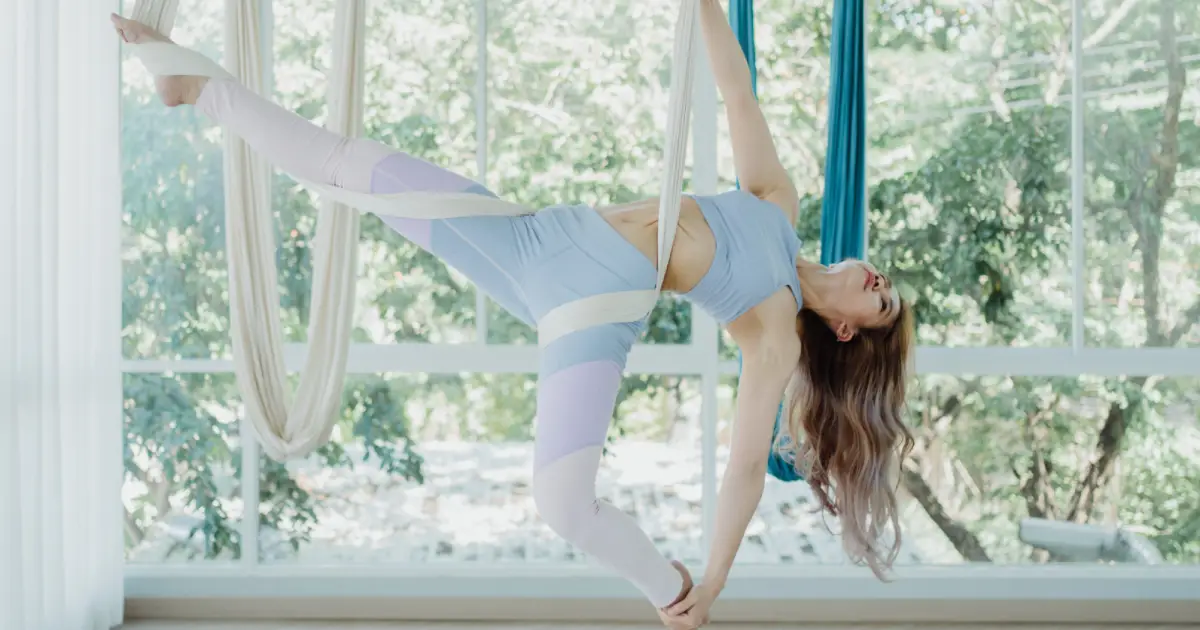
Aerial yoga raises the three core tenets of yoga — mindfulness, breath, and alignment — to new heights. Silk hammocks support inversions and deeper stretches.
- Evolution of Aerial Yoga
- Benefits of Aerial Yoga
- Starting Aerial Yoga at Home
- Beginner Poses: Take Flight with Ease
- Best practices for a safe Aerial Yoga experience
- Advancing Your Aerial Yoga Practice
- Therapeutic Uses of Aerial Yoga
- Teacher Training and Certification Processes
At its core, aerial yoga takes the three basic tenets of yoga (mindfulness, breath, and alignment) to new heights. It uses a silk hammock that hangs from the ceiling. The hammock allows playful inversions and deeper stretches, and it gives you support.
Evolution of Aerial Yoga
Iyengar yoga made props like blocks and straps popular. But he also tried hanging students in rope swings for deeper stretches. These early prototypes used silk harnesses rather than ropes. They helped pave the way for antigravity yoga in the late 1990s.
The first true yoga swing with handles and foot holds appeared in the UK in 2001. By 2011, “aerial yoga” and the well-known hammock had become a global craze. It had its own studios and teachers.
So, the roots of aerial yoga go back to Iyengar’s clever use of props. This grew into a well-liked form of yoga. It gracefully blends traditional yoga with the challenge and support of silky hammocks.
Benefits of Aerial Yoga
Physical
Increased range of motion and flexibility: The hammock or silks support your body. This lets you stretch further and reach new heights of flexibility.
Strengthening your upper body and core: Aerial poses work muscles you would not normally use. This tones your arms and shoulders and strengthens your core.
Better spinal alignment and decompression: The hammock’s inversion relieves pressure on the spine. This lowers back pain and encourages proper alignment.
Cardiovascular exercise that burns calories: Aerial yoga can be surprisingly hard. It raises your heart rate and burns calories while you have fun.
Mental
Stress reduction and mindfulness: Aerial yoga’s flow and focus offer a welcome break from the stresses of daily life. They encourage calm and awareness.
Increased self-expression and confidence: Learning new aerial poses and getting over your fears builds playful self-expression and confidence.
Better balance and coordination: The unsteady hammock tests your balance and coordination. This improves your overall control.
Starting Aerial Yoga at Home
Essential Equipment
- Silks or hammocks: Choose one that suits your weight and skill level.
- Hardware for mounting: Install yoga frames or ceiling anchors so that your equipment is held securely.
- Yoga mat: Give floor exercises some cushioning and traction.
Creating a Home Aerial Studio
- Look for a large, well-ventilated room with tall ceilings.
- Make sure there is enough space around the hammock or silks, so nothing is in the way.
- For safety, spend money on crash pads or soft mats.
Beginner Poses: Take Flight with Ease
To ease into your first class, try these basic poses from Aerial Yoga:
- In the seated hammock pose, place your feet flat on the ground. Sit comfortably in the middle of the hammock. Gently lean back and let the hammock cradle your spine.
- Supported Child’s Pose: Bend down in the hammock and place your big toes together. Rest your forehead on the hammock, arms outstretched or by your sides.
- Hammock Plank: Begin in the high plank position. Grip the hammock with your hands beneath your shoulders. Engage your core and keep your body in a straight line.
- For the downward-facing dog pose in a hammock, push your hips back and up. Straighten your legs as far as feels comfortable. Lean back and relax, and let the hammock hold your shoulders.
- Sit in the hammock in the butterfly pose. Open your knees wide and place your soles together. Gently flutter your knees up and down. At the same time, lean back and let the hammock support your upper body.
Best practices for a safe Aerial Yoga experience
- Consult a professional: Take lessons from a certified aerial yoga instructor to learn proper form and safety measures. This is crucial for beginners, and even for experienced yogis trying new poses.
- Pay attention to your body: Know and respect your limits. Never try a pose that hurts or feels uncomfortable. Start slowly, and progress step by step as your strength and flexibility grow.
- Warm-up and cool-down: Spend five to ten minutes warming up briskly before class. Stretch gently afterward. This prepares and relaxes your muscles.
- Staying hydrated is essential: Stay hydrated throughout your practice and the day. It helps you avoid cramps and keeps your muscles lubricated.
- Dress appropriately: Wear form-fitting clothes that will not snag or slip on the fabric. They should let you move freely. Avoid loose accessories or jewelry that can get tangled in the hammock.
Advancing Your Aerial Yoga Practice
Advanced Techniques in Aerial Yoga
- Go beyond simple headstands and handstands to deepen the inversions. Explore shoulder hangs, scorpion poses, full inversions with leg wraps, and even aerial versions of the crow pose.
- Test your inner strength: Add dynamic moves such as plank posture transitions, leg lifts, and aerial sit-ups. Try flying versions of side planks with twists and boat poses.
- Discover new transitions: Use the hammock for momentum and support as you flow between sequences. Imagine handstand rolls into inversions, leg swings into backbends, and artful aerial flows.
- Use the hammock’s fabric for deeper stretches, such as hamstring pulls and assisted backbends. Practice holding poses while the hammock gives resistance and support.
Therapeutic Uses of Aerial Yoga
Decompression and Pain Relief
The hammock’s soft support cradles the spine. This eases pressure and tension. Those who suffer from sciatica, persistent joint problems, or back pain may find this especially helpful. Picture yourself upside down. Feel the intervertebral discs gently decompress and your spine lengthen.
Improved Flexibility and Strength
With the hammock’s help, you can safely reach deeper stretches and work your muscles in new ways. This is gentle on your joints. It results in better core strength, flexibility, and balance. Imagine yourself extending into a warrior pose with grace. You lean on the hammock as your muscles grow longer and your core gets stronger.
Enhanced Body Awareness
Being suspended boosts proprioception, or the awareness of your body in space. With this greater awareness, you can move with more control and precision. It also helps you avoid injuries and keep better posture. Imagine being aware of every little detail of your movements. The hammock helps you reach the best alignment in each pose.
Teacher Training and Certification Processes
Yoga Foundation
Most programs require a prior 200-hour Yoga Teacher Training (YTT) certification. This builds the base for understanding basic yoga principles. It also prepares you to safely assist students in various asanas.
Aerial Yoga Teacher Training
Pick a respected course that fits both your budget and learning preferences. These courses cover many aerial techniques, safety precautions, lesson planning, and teaching methods. They usually run between 50 and 200 hours.
Certification
After training, you should think about becoming certified by an established organization. This adds credibility and opens doors to more job options.

Train with Us in Rishikesh
Enjoyed “A Guide to Aerial Yoga”? Learn it in person with our teachers at our school in Tapovan, Rishikesh. Courses start on the 1st of every month.